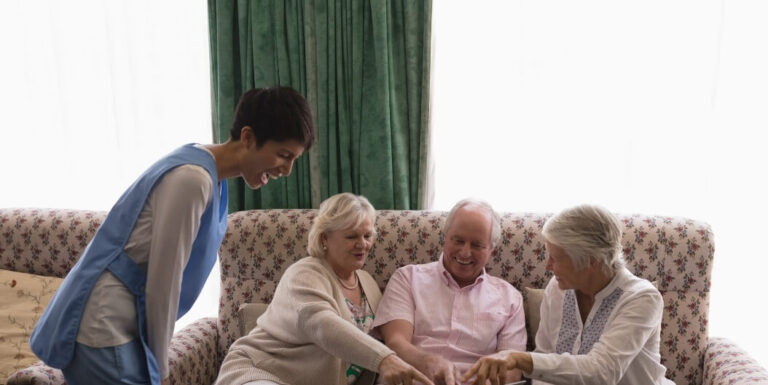

How Memory Care Communities Prioritize Safety for Senior Residents
Ensuring your loved one’s safety can be a major concern when they’re living with dementia. Wandering, falls, missed medications, and other events or behaviors can happen out of the blue and, in a matter of seconds, put them in danger. Simple activities can even become high-risk situations when a person’s memory and judgment begin to decline.
That’s why having the right support in place is crucial. Memory care communities understand the safety risks that come with dementia and proactively address them through 24/7 supervision, carefully structured routines, and specially trained caregivers. Read on to find out how memory care communities keep residents safe and secure, so you can feel confident that your loved one is in good hands.
Safety Measures in Memory Care Communities
Here’s how memory care creates a secure and supportive environment to keep residents safe
Secure, Monitored Entrances and Exits
Wandering is a common risk factor for people with dementia. You may fear that your loved one will wander off without knowing what they are doing. And this behavior is especially risky when they are near a street or an unfamiliar location.
However, on the bright side, a memory care unit has secure, monitored entrances and exits. Doors are designed so that residents and staff can access the community easily and safely, but residents are prevented from leaving unsupervised. Security systems monitor all entry and exits and notify caregivers of unusual activity.
24/7 Staff Supervision
Caregiving may be needed at any time of day or night, and emergencies can happen at any moment. Memory care is available 24 hours a day, seven days a week, so that there is always someone on duty to assist.
Should a problem occur, such as disorientation, agitation, a fall, or another emergency, staff members can quickly respond and provide aid. You won’t have to be the only person on the scene when a crisis occurs. With 24/7 care, you enjoy the peace of mind in knowing that help is always nearby.
Fall-Prevention Design and Clutter-Free Layouts
Falls can occur with just a small misstep, especially when memory, balance, or coordination is compromised. You may find your loved one becoming tentative on stairs or tripping over rugs and furniture. However, supervised living reduces the risk of accidents in dementia care. Staff monitor the environment from time to time to declutter walkways and provide physical guidance if needed.
Fall-prevention design and clutter-free layouts also play a significant role. In these communities, you’ll find wide hallways, non-slip flooring, and proper lighting. These features and fixtures make it easier and safer to move around. With these safeguards, your loved one can maintain mobility with less risk, and you don’t have to worry about every rug or stairway.
Assistance with Daily Activities
Daily hygiene and grooming routines may become more difficult to follow as dementia progresses. You may notice that you are always asking your loved one to take a bath or get dressed. Providing support and reminders can be tiring.
Memory care homes offer direct assistance with your loved one’s daily routine. Trained staff can complete these tasks in a safe and dignified manner. The team will encourage your loved one to do as much as possible on their own, but they will provide support when necessary. Your loved one can rely on this assistance each day to feel clean and comfortable.
Medication Management and Reminders
Monitoring medications is stressful and overwhelming for everyone. Forgetting or doubling up a dose can impact your loved one’s health and mood. However, memory care communities take the burden of medication management off your shoulders with organized reminders and professional checks.
Staff members will make sure your loved one receives medications on time and in the right dosage. You won’t have to constantly check pill boxes or feel guilty if a mistake interferes with your loved one’s health. A consistent medication plan can promote stability and minimize risk.
Clear Signage for Easy Navigation
Memory loss can make even the most familiar spaces confusing to a person with dementia. Your loved one may struggle to remember where their room is, or how to get to the dining room or common spaces. Memory care communities are designed with clarity of signage and wayfinding to allow residents to safely navigate the property independently.
Visual cues, predictable layouts, and clearly labeled spaces help to minimize frustration and confusion. Team members are also always nearby to assist with directions, if needed.
Emergency Response Systems
Emergencies can arise without warning. Your loved one could fall, become acutely ill, or experience a period of intense disorientation or confusion. If they are home alone, you may fear that help may not arrive in time. Memory care communities have emergency response systems and protocols in place.
Trained staff can identify urgent situations and respond immediately. Alarms, call systems, and a rapid response team allow issues to be handled before they become an emergency. For your loved one, it provides a sense of safety and security in knowing help is always available. For you, it means one less thing to worry about.
Calm, Predictable Environments
If your loved one experiences anxiety in new or unfamiliar situations, living in a memory care community provides peace of mind. When the surroundings and routine change, your loved one may become restless, pace, or act emotionally distressed.
Memory care communities are designed with as few triggers as possible in calm and predictable environments. This includes lighting, noise levels and room arrangements. They also use furniture and decor that help reduce the likelihood of stress or agitation. Also, staff are trained to respond to agitation or anxiety with calm reassurance and redirection.
Explore Memory Care Designed Around Safety At Lyndale Abilene Memory Care
If safety and support are what you are looking for in a care community, Lyndale Abilene Memory Care has the environments designed to keep residents protected and engaged every day. Everything is designed with your loved one’s safety and comfort in mind. Schedule a tour today and see the design and care in action.